

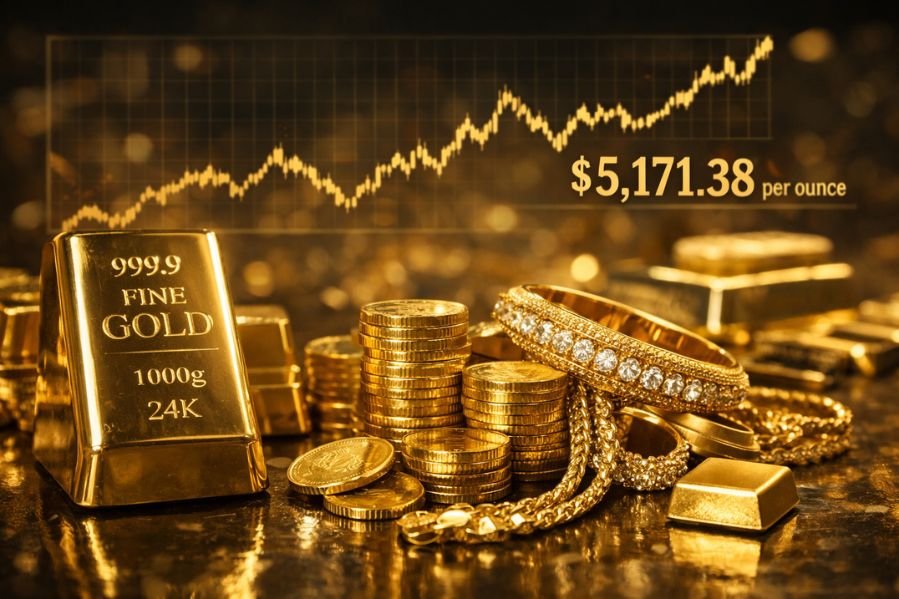

The 24k gold market price remains one of the most watched indicators in the precious metals world because it reflects not only the value of pure gold, but also the mood of the global economy, investor confidence, inflation expectations, currency movements, and geopolitical uncertainty. When people talk about the value of gold, they often refer to 24 karat gold, the purest form commonly traded in the retail and investment markets. Because of its purity, 24k gold holds a special place among investors, jewellers, collectors, and ordinary buyers who see it as both a luxury asset and a financial safeguard. Understanding the market price of 24k gold is important for anyone who plans to buy jewellery, invest in bullion, compare gold rates, or simply stay informed about one of the world’s most trusted stores of value.
What Is 24k Gold and Why Is It Important?
24k gold is the purest form of gold generally available in the market, containing nearly 99.9% gold content. Unlike 22k or 18k gold, which are mixed with other metals for strength and durability, 24k gold is prized for its richness, bright yellow appearance, and higher intrinsic value. This purity is the main reason the 24k gold market price is often used as a benchmark for global gold rates. While lower-karat gold may be more common in jewellery due to practical use, 24k gold is highly significant in bars, coins, and high-value purchases where purity matters most. Its importance goes beyond beauty, because it acts as a financial reference point in both local and international markets. Whether someone is checking the value of a gold coin, a gram of investment-grade metal, or a large bullion purchase, the starting point is usually the current market price of 24k gold.
How the 24k Gold Market Price Is Determined
The 24k gold market price is not chosen randomly by local sellers or retailers. It is influenced by international spot gold prices, which are shaped by live trading activity across global financial markets. Gold is bought and sold in large volumes every day by central banks, institutional investors, commodity traders, and private buyers. The spot price represents the current market value of gold for immediate delivery and serves as the basis for pricing 24k gold across countries, including the United States. Once the global price is set by market activity, local pricing may be adjusted by currency exchange rates, import costs, taxes, dealer premiums, refining charges, and regional demand. That is why the same ounce of pure gold may have a slightly different retail value depending on where and how it is purchased. Even so, the international spot rate remains the strongest foundation behind the final number consumers see.
Why the Price of 24k Gold Changes Every Day
One of the most important things to understand about the 24k gold market price is that it is constantly moving. Gold prices can rise or fall within hours because they respond to economic news, financial sentiment, and changing global risk conditions. If inflation concerns increase, gold often becomes more attractive because many investors view it as a hedge against declining currency value. If the US dollar strengthens significantly, gold may come under pressure because it becomes more expensive for foreign buyers. When rates rise, some investors prefer income-producing assets, which can reduce gold demand. On the other hand, when uncertainty spreads across stock markets, banking systems, or political regions, many people turn to gold as a traditional safe-haven asset. This daily push and pull is exactly why the market price of 24k gold rarely stays still for long, and why serious buyers closely monitor price movements before making a purchase.
Major Factors That Influence 24k Gold Market Price
Several powerful forces affect the price of 24k gold, and each can shift value in meaningful ways. The first is inflation, as gold is often seen as a hedge against rising living costs. The second is interest rates, especially those set by the US Federal Reserve, because rate decisions directly affect investment behaviour. The third is currency performance, particularly the strength of the US dollar, which has an inverse relationship with gold in many market conditions. Another major factor is geopolitical tension, including wars, trade disputes, sanctions, and election-related uncertainty, all of which can drive investors toward safer assets. In addition, central bank gold buying can support prices, especially when countries increase reserves to reduce reliance on foreign currencies. Consumer demand in key markets, including Asia and the Middle East, also matters because jewellery demand and cultural buying patterns contribute to global physical gold consumption. When all these elements combine, they create a dynamic environment where 24k gold prices can shift quickly and sometimes dramatically.
24k Gold Price Per Ounce, Gram, and Kilogram
The 24k gold market price is usually quoted in different weight units so buyers can understand the value at various scales. The most common benchmark in international markets is the troy ounce, which is widely used in financial reporting and bullion trading. However, many retail buyers prefer checking the price per gram because it is easier to use when purchasing jewellery or small bars. Others look at the price per 10 grams, especially in regions where that measure is common in day-to-day gold trade. Large investors and institutions may review value per kilogram, as it provides a clearer picture of bulk purchase pricing. Although these units differ in size, they all reflect the same underlying market value, mathematically adjusted. This is why the ounce, gram, and kilogram prices move together. A person interested in pure gold should always verify the unit quoted to avoid confusion when comparing prices among dealers, websites, and local sellers.
Why 24k Gold Is Popular Among Investors
For generations, investors have trusted gold because it combines physical value, historical credibility, and global recognition. The 24k gold market price attracts attention because pure gold is not tied to the performance of a single company, industry, or government. Stocks may crash, currencies may weaken, and real estate may become illiquid, but gold often holds a special role as a stabilising asset during uncertain periods. This does not mean gold only rises, because it can and does experience volatility. However, many investors still consider 24k gold a practical way to diversify risk and preserve wealth over time. Its universal acceptance adds to its appeal. A gold bar or coin made from pure gold carries value in nearly every part of the world, making it both a financial asset and a liquid store of wealth. That enduring trust is one of the main reasons people continue to closely monitor the price of 24k gold.
Jewellery Buyers and the Real Meaning of Market Price
For jewellery buyers, the 24k gold market price is important, but it is not always the final amount paid at a shop. The market price reflects the value of the pure gold content, but retail jewellery pricing often includes additional costs such as craftsmanship, design charges, retailer margins, branding, wastage, and applicable taxes. That means a 24k gold necklace or bracelet may cost noticeably more than the raw gold value alone. In some cases, extremely pure gold jewellery may also be less practical for everyday wear because 24k gold is softer than lower-karat alternatives. Even so, many buyers still prefer it because of its prestige, purity, and resale appeal. Anyone buying jewellery should separate the intrinsic gold value from the making and retail costs. Doing so provides a much clearer understanding of whether the final price truly reflects the current market or has been heavily marked up.
How to Track 24k Gold Market Price Smartly
Tracking the 24k gold market price requires more than glancing at one number once in a while. A smart approach involves watching the broader trend rather than reacting emotionally to every small move. Buyers should compare recent highs and lows, observe whether the market is moving steadily upward or downward, and pay attention to major economic events that can affect pricing. It is also wise to distinguish between spot and retail prices, as the difference can influence purchase timing. Long-term buyers often focus on value and consistency rather than trying to catch the exact lowest moment. Meanwhile, short-term traders may care more about momentum and rapid market shifts. In both cases, having a basic understanding of gold pricing patterns can lead to better decisions. Patience, timing, and clarity about purpose all matter when following a market that changes as quickly as gold does.
The Future Outlook for 24k Gold Market Price
The future of the 24k gold market price will continue to depend on economic conditions, monetary policy, investor behaviour, and global stability. As long as inflation remains a concern in many economies and uncertainty continues to affect financial markets, gold is likely to stay highly relevant. At the same time, price growth is never guaranteed, as gold can also come under pressure when interest rates rise sharply or when investors shift toward higher-yield assets. What remains consistent is the long-term importance of pure gold as a benchmark of wealth and security. In a world shaped by rapid financial change, digital assets, policy shifts, and unpredictable events, 24k gold still carries a timeless appeal. That combination of tradition, purity, and market sensitivity is what keeps its price in constant focus across the globe.
Conclusion
The 24k gold market price is much more than a simple number on a screen. It reflects the value of pure gold in real time and is influenced by factors such as inflation, interest rates, the US dollar, investor sentiment, global instability, and physical demand. Whether someone is buying bullion, comparing jewellery rates, or studying the market as an investor, understanding how 24k gold is priced can lead to more informed and confident decisions. Because it is the purest commonly traded form of gold, 24k gold remains the standard by which many other gold products are measured. Its price will always move with the market, but its importance remains remarkably steady. For anyone serious about wealth protection, precious metals, or gold buying, learning the meaning behind 24k gold prices is a smart and valuable step.
Disclaimer
This article is for general informational purposes only and should not be considered financial, investment, or trading advice. The 24k gold market price changes frequently based on live market conditions, and actual buying or selling prices may vary depending on dealer premiums, taxes, regional demand, and product type. Readers should verify current rates independently and consult a qualified financial professional before making any investment or purchasing decision related to gold.
