


Introduction
What happens when old-school banking meets fast-moving crypto?
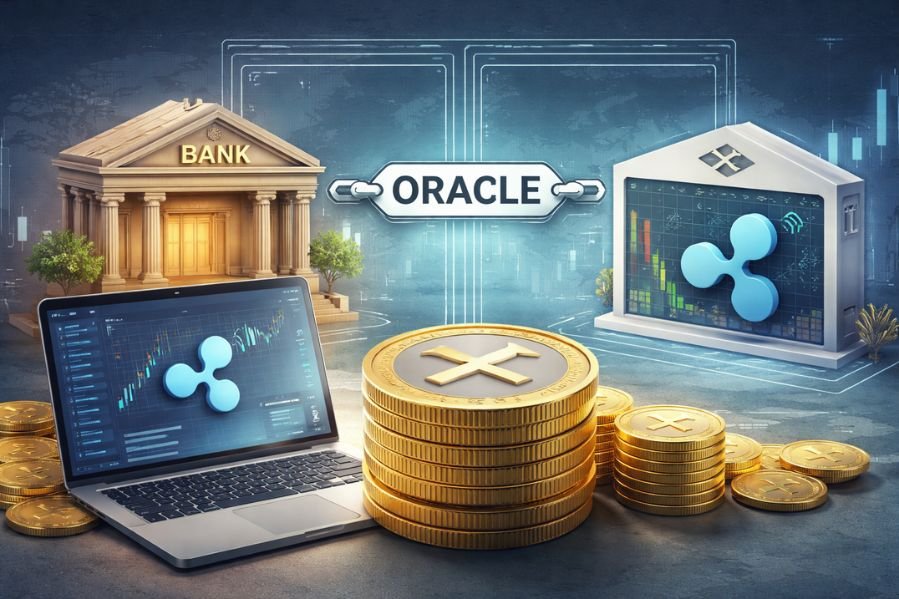
Ripple’s Oracle Bank ledgers aim to unify traditional finance with blockchain by combining established banking infrastructure with blockchain capabilities. This effort is attracting widespread attention.
Banks and crypto once operated separately: one slow and paper-heavy, the other offering instant, borderless finance. Ripple Oracle Bank ledgers now aim to bridge those worlds using blockchain, real-time data, and smarter settlement systems.
To evaluate if Ripple Oracle Bank ledgers can truly connect banking and blockchain, it’s important to clarify a core question: Can this hybrid approach solve real institutional problems by combining trust, adoption, and risk management? This foundation is critical as we move on to explore what crypto means in this context.
What Is Crypto in the Context of Ripple Oracle Bank Ledgers?
At its core, crypto is digital money or digital value that runs on a blockchain rather than through a central bank or payment company. But the crypto market has grown far beyond simple coins. Today, it includes tokenized assets, smart contracts, digital payments, and decentralized finance.
With Ripple Oracle bank ledgers, the focus shifts from hype to infrastructure—specifically, whether crypto is useful for financial institutions.
Here’s the thing: Ripple and the XRP Ledger are often discussed as tools for moving value quickly across borders. The broader idea is simple enough. Banks still rely on slow systems, messy reconciliations, and expensive intermediaries. Crypto networks promise faster settlement, lower friction, and better transparency. The missing piece is data. That is where oracles come in.
An oracle is basically a bridge. It pulls real-world information, such as exchange rates and asset prices, into a blockchain environment so smart contracts and on-chain systems can respond to real events. Without that link, a blockchain can be powerful, but blind.
So when people talk about ripple oracle bank ledgers, they usually mean a structure in which bank data, payment flows, or asset values can interact with a blockchain ledger in a secure and useful way.
How Ripple Oracle Bank Ledgers Work
Let’s keep this beginner-friendly.
Imagine a bank wants to move value from one country to another. Traditionally, that can involve several middlemen, delays, and high fees. Now imagine the bank also wants access to tokenized assets or on-chain settlement, but still needs trusted pricing and compliance-friendly records.
That is the basic use case behind Ripple Oracle Bank ledgers.
The Ledger Layer
A blockchain ledger records transactions in a shared, tamper-resistant way. Instead of having a single institution hold the master record, the network maintains it collectively. That creates transparency and speed, at least in theory.
The Oracle Layer
An oracle feeds external data into that ledger. For example:
- Currency exchange rates
- Asset prices
- Interest benchmarks
- Real-world event triggers
- Token valuation data
This matters because smart systems on-chain need fresh data to function correctly. A tokenized bond is not very useful if the system cannot verify its market value. A lending protocol becomes dangerous if pricing data is delayed or inaccurate.
The Bank Connection
Now add banks to the mix. Traditional institutions still operate with internal ledgers, compliance systems, and reporting requirements. They cannot simply jump into a fully decentralized environment and hope for the best.
That is why the conversation around ripple oracle bank ledgers continues to grow. The idea is a hybrid setup: banks retain the necessary structure, blockchain adds speed and programmability, and oracles connect both to live data.
In simple terms, it works like this:
- A bank or financial platform needs to move or tokenize value.
- The blockchain ledger records and settles that activity.
- The oracle feeds verified off-chain data into the ledger.
- Smart logic or settlement rules respond in real time.
This concept sounds elegant in theory, but the main argument is whether Ripple Oracle Bank ledgers can actually deliver on bridging bank reliability with blockchain speed. The promise is significant—effectively combining these worlds is the true challenge.
Why Ripple Oracle Bank Ledgers Are Trending
Crypto often chases trends, but few offer real value.
Ripple’s Oracle Bank ledgers are trending because the market wants projects with real utility.
This trend draws attention by addressing real institutional needs rather than just market excitement. That focus brings substance.
Institutions Want Blockchain, But Carefully
Banks are not rushing into chaos. They want efficient systems, yes, but they also want control, compliance, and auditability. That makes a hybrid model more attractive than a fully open and chaotic one.
Tokenization Is Getting Serious
Tokenized real-world assets have become a hot topic in crypto news. People are talking about bringing bonds, money market products, real estate, and cross-border payments on-chain. That requires trusted data, and trusted data means oracles.
The Market Loves Bridge Narratives
Let’s be honest, the market always gets excited when a project claims it can bridge two giant industries. In this case, it is banking and crypto. That story is powerful. It feels bigger than one coin or one app. It sounds like infrastructure, and infrastructure stories tend to attract serious attention.
Post-Hype Crypto Wants Real Use Cases
After every crypto crash, the same question comes back: what actually survives? Usually, it is not the loudest project. It is the one with a real-world function. That is part of why Ripple Oracle Bank ledgers keep showing up in conversations about the next phase of blockchain adoption.
Ripple Oracle Bank Ledgers Price Action and Growth Story
No crypto article feels complete without the market angle, because price action shapes perception, whether people admit it or not.
Ripple-related narratives have always had dramatic swings. There have been periods of intense optimism, sharp pullbacks, and renewed interest. That cycle is familiar across nearly every major altcoin, but Ripple has often stood out because its story was never just about retail speculation. It was tied to payments, institutions, and cross-border efficiency.
That gives the growth story a different flavor.
When the market is risk-on, the Ripple Oracle Bank ledgers narrative can look explosive. Why? People start imagining large financial institutions, tokenized assets, real-time settlement, and mainstream adoption all hitting at once. In those moments, valuation can run ahead of reality very quickly.
Then sentiment changes.
Maybe the broader market weakens. Maybe the regulation will tighten. Maybe adoption takes longer than expected. Suddenly, the same story looks fragile, and prices can slide hard. This is the brutal truth of crypto. A strong narrative can create momentum, but momentum is not the same thing as revenue, usage, or lasting demand.
The growth story is compelling—yet it hinges on Ripple Oracle Bank ledgers achieving practical, institutional adoption. Success depends on sentiment, regulation, and above all, real-world utility. The main message: the story is attractive, but its true impact lies in overcoming practical obstacles.
Hidden Risks and Red Flags ⚠️ in Ripple Oracle Bank Ledgers
This is the part people often skip. They should not.
The greatest danger is that Ripple Oracle Bank ledgers sound so useful, people may overlook whether they actually deliver the transformation promised. Success is far from inevitable—scrutiny must be as strong as the narrative.
1. Adoption Risk
Banks move slowly. Very slowly. Even when the technology works, institutions may take years to integrate it. Internal approvals, legal reviews, vendor risk checks, and regulatory concerns can drag things out.
2. Oracle Trust Risk
Oracles are supposed to bring truth into the system. But what if the data feed is wrong, delayed, or manipulated? That creates a weak point. If bad data enters the ledger, bad decisions can follow.
3. Regulatory Pressure
Any model connecting banks and blockchain will face heavy scrutiny. That includes settlement rules, cross-border reporting, asset classification, and consumer protections. One policy shift can change the outlook fast.
4. Narrative Risk
A strong story can become a trap. When the phrase ripple oracle bank ledgers starts sounding like the answer to everything, investors may ignore basic due diligence. That is how people walk straight into investment risk.
5. Market Volatility
Even projects with legitimate use cases can get dragged down during a broad selloff. A good narrative does not make a token immune to panic, liquidity shocks, or a wider crypto crash.
6. Scam Risk and Hype Layers
This does not mean Ripple itself is a scam. Not at all. But once a narrative becomes hot, copycats and low-quality projects rush in. That opens the door to scam risk, fake partnerships, and exaggerated claims.
A few quick red flags to watch:
- Vague institutional claims with no substance
- Overpromising “bank adoption” without real evidence
- Constant hype, little technical clarity
- Price talk with no discussion of risks
- Community narratives that treat caution like betrayal
That last one matters more than people think. Key takeaway: Overlooking red flags and relying solely on hype greatly raises the risk of poor investment outcomes.
Is Ripple Oracle Bank Ledgers Worth Investing In? Real Talk
Now for the real talk section.
Is Ripple Oracle Bank’s ledgers investable? Potentially, yes. But not in the lazy, blind-faith way many people approach crypto. Ultimately, navigating this new landscape will require careful research, awareness of real-world risks, and patience. Stay alert to evolving opportunities, and remember: only informed, thoughtful decisions can bridge the gap between innovation and meaningful returns.
The bullish case is obvious. If blockchain settlement, tokenized assets, and institutional data integration continue to grow, this theme could become one of the more practical areas of crypto. It taps into real financial pain points. It is not just built on vibes.
But the bearish case is real, too. Adoption may be slower than the market wants. Competition is fierce. Regulatory complexity is not going away. And price can detach from fundamentals for long stretches.
So where does that leave a regular investor?
Probably here:
- It may be worth watching if you like infrastructure plays.
- It may fit a high-risk part of a diversified crypto allocation.
- It is not something to buy just because the story sounds smart.
- It should never be treated like a guaranteed winner.
Let’s be honest, smart-sounding narratives can lose money, too.
If you are investing based on the Ripple oracle bank ledgers theme, you need patience, skepticism, and a willingness to be wrong. That is not glamorous, but it is real.
Future Outlook for Ripple Oracle Bank Ledgers
The future here looks promising, but not simple.
The most realistic outcome is not a dramatic overnight banking revolution. It is a gradual adoption. Small pilots. Narrow institutional use cases. Selective tokenization. More experimentation around settlement and pricing feeds. Slow progress that only looks obvious in hindsight.
That may actually be healthier than hype.
If the ripple oracle bank ledgers model gains traction, it will likely be because it solves boring but expensive problems. Faster reconciliation. Better transparency. Cleaner cross-border flows. More reliable tokenized asset pricing. That is how infrastructure wins, quietly at first.
Now, this is where it gets interesting again. If markets return to chasing utility over noise, this theme could gain serious attention. But if the industry falls back into pure speculation, real infrastructure stories may get overshadowed for a while.
Either way, the long-term question is not whether the idea sounds good. It does. The real question is whether institutions trust it enough to use it at scale.
That is a much harder test.
Conclusion
The story of Ripple Oracle Bank ledgers is really the story of crypto growing up.
Instead of asking whether blockchain can replace banks tomorrow, this approach asks a better question: can blockchain make existing financial systems faster, smarter, and more connected? That is a more grounded idea, and probably a more useful one too.
There is real promise here. There is also real investment risk. The technology sounds strong. The bridge narrative is compelling. But investors should stay alert, think critically, and avoid getting swept up in polished buzzwords.
Because in crypto, the most exciting story is not always the safest one.
Still, this is one area worth watching. Not because it guarantees a boom. Not because it promises easy money. But it sits at the exact point where traditional finance and blockchain may finally learn to work together.
(FAQs)
What does ripple oracle bank ledgers mean in simple terms?
It refers to the use of Ripple-related blockchain infrastructure, oracle data feeds, and ledger systems to connect traditional banking activity with on-chain settlement and tokenized finance.
Why are Ripple Oracle Bank ledgers important in crypto?
They matter because they aim to solve a real problem: how to bring trusted off-chain financial data into blockchain systems so banks and digital networks can work together more smoothly.
Are Ripple Oracle Bank ledgers good for beginners to invest in?
They can be interesting, but beginners should be careful. This is still crypto, which means high volatility, fast-changing narratives, and serious investment risk.
Can Ripple Oracle Bank ledgers reduce the risk of crypto scams?
A stronger infrastructure model may reduce some risks, but it does not remove scam risk from the broader market. Investors still need to verify claims and stay cautious.
Could Ripple Oracle Bank ledgers survive another crypto crash?
Possibly. Infrastructure themes often hold more long-term value than pure hype plays. But during a major crypto crash, even strong narratives can suffer steep losses.
Disclaimer
This article is for informational purposes only and should not be treated as financial advice. Crypto is highly volatile and involves substantial investment risk. Always do your own research, review multiple viewpoints, and never invest money you cannot afford to lose.
